A progressive approach to helping the body reorganize posture, movement, and balance through the intelligence of the fascial system.
Using the Anatomy Trains Structural Integration (ATSI) method, this work addresses the body as an interconnected system of myofascial lines rather than isolated areas of pain.
Through a strategic 12-session progression, Structural Integration helps the body reorganize its relationship with gravity, supporting lasting changes in posture, mobility, breathing, and nervous system regulation.
Many of the clients who seek Structural Integration feel that their bodies carry long-standing patterns that haven’t fully resolved through conventional approaches.
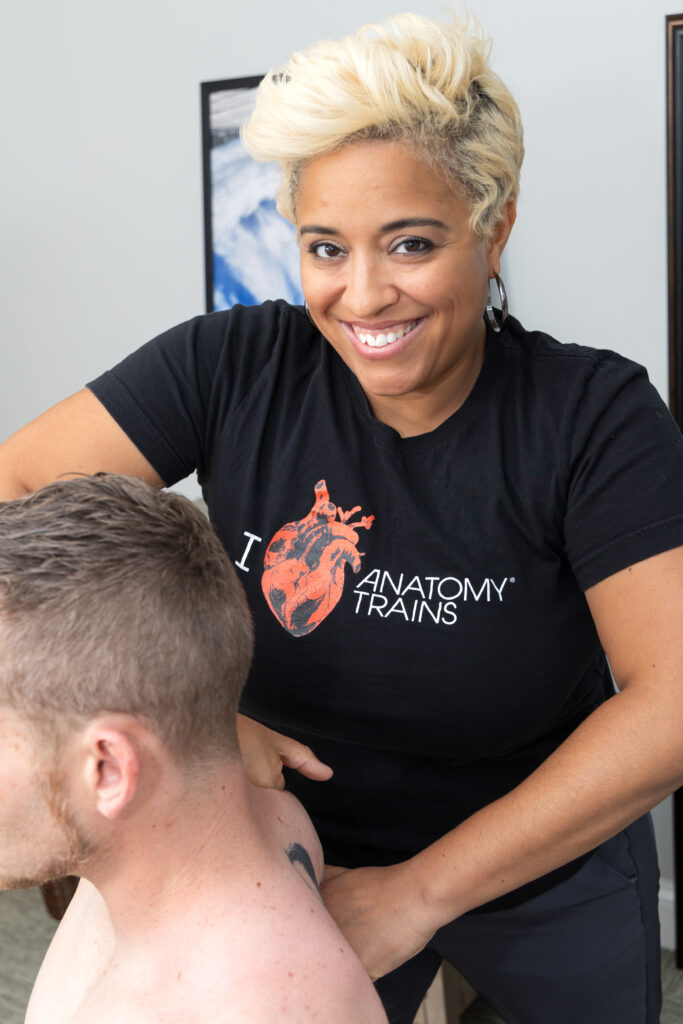
“Structural Integration is not about forcing change. It is about restoring balance within the body’s fascial system so it can organize itself more efficiently in gravity.”

Serena is a board certified practitioner in the Anatomy Trains Structural Integration method and specializes in working with complex structural presentations, including scoliosis, hypermobility, and autonomic nervous system sensitivity.
Her work focuses on understanding how tension patterns travel through the body’s fascial lines rather than treating isolated symptoms.
The Anatomy Trains Structural Integration (ATSI) 12-Series is a method of bringing the locomotor and sensory systems of a human being to a new level of integrated function. This is achieved through a progressive 12-session process designed to reorganize the body’s fascial network — the connective tissue system that shapes posture, movement, and long-term strain patterns.
Rather than asking where it hurts, ATSI asks:
This approach shifts manual therapy away from treating isolated symptoms and toward integrating global structural patterns.
Instead of chasing pain, Structural Integration addresses the deeper relationships that influence how your body:
Each session builds intentionally upon the previous one, creating cumulative and measurable shifts in:
Certified in the Anatomy Trains method, Serena works with the body’s myofascial lines — continuous fascial pathways that transmit tension and compensation throughout the entire system.
By addressing these lines in a strategic sequence, the 12-Series helps restore balance between stability and mobility.
This is not massage.
It is a structural process.
Many clients first discover Structural Integration after trying massage therapy, chiropractic care, or physical therapy for persistent tension or pain patterns.
While those approaches can be helpful, Structural Integration works from a different perspective.
Massage therapy typically focuses on local muscle tension and relaxation. Structural Integration looks at how tension is distributed through the entire fascial network of the body.
Instead of working only where symptoms appear, Structural Integration examines how the body is organizing itself in gravity and how strain may be traveling through the body’s long myofascial lines.
For example, persistent shoulder tension may not originate in the shoulder itself. It may be influenced by the organization of the rib cage, pelvis, or the rotational patterns of the body’s Spiral Line.
Rather than chasing symptoms from place to place, Structural Integration works to reorganize the relationships between these structures, allowing the body to move and support itself more efficiently.
Sessions are intentional and precise. The goal is not simply to release tight tissue, but to help the body redistribute load and restore balanced tension across the entire fascial system.
For many clients, this approach leads to changes that feel deeper and more sustainable than temporary relief.
Structural Integration is best experienced as a committed series. Each session has a specific structural objective, and meaningful change emerges through the full progression.
This work is ideal for individuals who are ready to:
Serena specializes in working with individuals whose bodies do not fit simple templates.
Her practice frequently supports clients navigating:
This is thoughtful, pattern-based work designed for bodies that require nuance.
Rather than forcing change, Serena works with your system’s existing organization — creating strategic shifts that respect connective tissue integrity and nervous system regulation.
The 12-session progression allows for comprehensive integration without rushing adaptation.
Structural Integration is not relaxation massage.
It may not be the right fit if you are:
This work is precise and intentional.
It is not about force, endurance, or pushing through discomfort.
It is about working with your nervous system to support sustainable reorganization.
While rooted in the lineage of Structural Integration and informed by the Anatomy Trains fascial model developed by Thomas Myers, Serena’s approach is neither rigid nor formulaic.
Rather than applying a one-size-fits-all sequence, Serena uses her variety of skillsets to adapt each session to the client’s structural reality — particularly in cases involving:
The work honors:
This is structural work for modern bodies — complex, adaptive, and intelligent.
Structural Integration at Bodycentric Healing Arts is designed for individuals ready to move beyond temporary relief and into long-term structural resilience.
Structural Integration is not a single technique, but a carefully sequenced process. Each session builds on the previous one, gradually reorganizing how the body balances, breathes, and moves in gravity.
Rather than forcing rapid change, the 12-session progression allows the body’s connective tissue and nervous system to adapt step by step, strengthening spatial awareness and sustainable structural integrity. We are painting sensation into the body.
Phase 1: Foundation
Sessions 1–
Goal: Build momentum for change and create a stable relationship with gravity
Phase 2: Core Myofascial
Sessions 5-8
Goal: Differentiating the core from superficial surroundings bringing it more alive in the client’s sensory awareness (interoception)
Phase 3: Integrating Sessions
Sessions 9–12
Goal: A body that moves with greater ease, balance, and adaptability
The Spiral Line is one of the most influential fascial continuities in the body. It wraps diagonally from skull to foot, coordinating rotational balance and managing asymmetry.
This line plays a major role in:
In complex cases — especially hypermobility or longstanding asymmetry — the Spiral Line is rarely neutral.
Addressing it intentionally in Session 4 allows the body to reorganize rotationally, not just vertically. For many clients, this is where the body begins to feel truly coordinated rather than simply aligned.
Modern life lives in the arms.
Typing. Driving. Lifting. Holding. Protecting.
The Arm Lines connect the hands to the rib cage, spine, and deep core. Chronic shoulder, neck, and upper back tension often persists because the arm relationships have not yet been fully integrated into the whole structure.
Session 11 addresses:
Without integrating the Arm Lines, earlier changes may not fully stabilize.
For professionals, athletes, and individuals managing stress-related bracing patterns, this session is often essential.
A 12-session process allows for:
It creates space for complexity without rushing change.
By Session 12, the work shifts from regional focus toward full-body integration.
Clients often experience:
The 12-session progression is not about more sessions.
It is about more complete integration.
Pain is often the last place a problem appears, not the first place it begins.
The human body functions as a tensegrity structure — a system in which tension and compression are distributed across the entire network rather than isolated in single areas.
In this system:
When one area becomes overloaded, the body redistributes tension through the system to maintain balance. Pain often appears where the system can no longer compensate.
This is why Structural Integration does not chase symptoms.
Instead, the work focuses on redistributing fascial load across the entire body so strain is no longer concentrated in vulnerable areas.
By restoring balanced tension across the myofascial network, the body can once again organize itself efficiently in gravity.
The result is not simply less pain — but a more resilient structural system.
Structural Integration may be a meaningful path for individuals who:
Structural Integration at Bodycentric Healing Arts is designed for individuals ready to explore their body’s deeper organization and support long-term structural resilience.
If you are curious about how your posture, movement patterns, and fascial relationships may be influencing persistent tension or discomfort, a Structural Integration consultation can help determine whether this progressive 12-session process is the right fit for you.
If you’re curious whether Structural Integration is the right approach for your body, we invite you to schedule a consultation or initial session to explore the process together.
Your first Structural Integration session is both a conversation and an exploration. We begin by discussing your history and goals, then observing how your body organizes itself in standing and walking.
The hands-on work is precise and collaborative — never forceful.
By the end of the first session, you will have a clearer understanding of your body’s patterns and the path forward. Each step in the process is paced to respect your body’s capacity for change.